Dialogue Pushes Reforms for Debt Sustainability

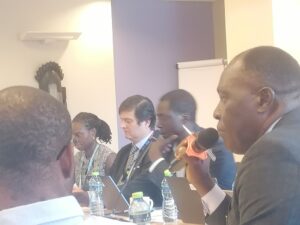
Ghana’s efforts to enhance fiscal discipline and strengthen public financial management have received a major boost as the Ministry of Finance and the Economic Governance Platform (EGP) joined the World Bank for a High-Level Policy Dialogue on Economic Governance in Accra.
The event forms part of an ongoing collaboration between the World Bank and the EGP, brought together government officials, parliamentarians, creditor agencies, development partners, academia, and civil society organizations. The dialogue focused on Ghana’s public financial management (PFM), debt sustainability, and evidence-based reforms aimed at safeguarding economic stability.
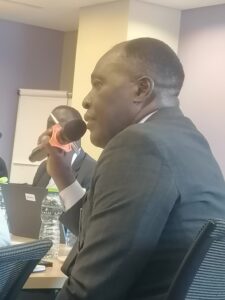
Speaking during the engagement, Dr. Theo Acheampong, Technical Advisor at the Ministry of Finance, revealed that government is set to operationalize a new Fiscal Council—a crucial institution designed to enforce compliance with Ghana’s recently introduced fiscal rules. These rules require a debt-to-GDP ratio not exceeding 45% and a primary surplus of at least 1.5%.
Dr. Acheampong explained that although the Ministry is internally working to achieve these targets, an external independent body is necessary to ensure credibility and prevent fiscal slippages.
“Countries that have independent fiscal institutions tend to deliver more credible budgets. The Fiscal Council will help check compliance and improve budget discipline,” he said.
Established under the revised Public Financial Management Act (Act 1136) in April, the Fiscal Council will operate with a Board and a Secretariat responsible for technical analysis. It will issue three major reports annually—during the mid-year budget review, the main budget presentation, and other assessments related to fiscal compliance. The Council will also evaluate value for money, poverty reduction impact, and inequality in government spending.
Government expects to fully constitute the Council early next year as Ghana prepares to exit its IMF programme by mid-2026.
At the same dialogue, Abdul Karim Mohammed, Coordinator of the Economic Governance Platform, emphasised that several EGP recommendations on sustainable debt management are already being implemented. Notably, the Ministry of Finance has introduced new commitment control measures to prevent state institutions from contracting debt without prior authorization.
He welcomed ongoing steps to establish the Fiscal Council, saying it would provide independent oversight similar to PIAC’s role in the extractive sector.
“This council will help citizens, the media, and civil society hold institutions accountable. With its sanction regime, it promises stronger transparency in public finance,” he stated.
The event also featured the presentation of findings from EGP’s study on Sustainable Debt Management in Ghana, insights from the World Bank’s PFM for Sustainable Development (PFM4SD), and the launch of the Swiss Embassy-supported project on improving PFM in Ghana.
Stakeholders expressed optimism that the new Fiscal Council will strengthen fiscal
responsibility and help prevent a recurrence of unsustainable debt accumulation.



Comments
Post a Comment