50,000 Tech Training Slots Reserved for PWDs

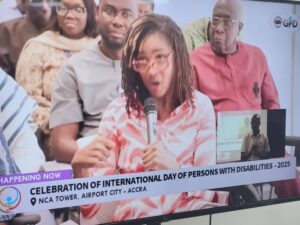
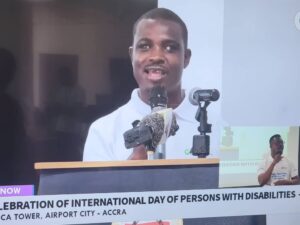
Ghana marked the 2025 International Day of Persons with Disabilities (IDPD) with a strong national call to deepen digital accessibility, inclusion, and equal opportunity for all citizens. The event, held at the NCA Tower in Accra, brought together government officials, industry players, development partners, and the Ghana Federation of Disability Organisations (GFD).
Hon. Samuel Nartey George, Minister for Communications, Digital Technology, and Innovations, emphasized that Ghana’s development strengthens when “every citizen can participate fully in society.” He rejected the limiting label of “persons with disabilities,” instead referring to them as “specially abled,” highlighting their unique capabilities.
Speaking on the theme “Assistive Technology: Empowering Lives and Advancing Inclusion,” Hon. George stressed that accessible technology is not a privilege but “a human rights obligation,” as stated in Ghana’s Persons with Disabilities Act (Act 715) and the UN Convention on the Rights of Persons with Disabilities.
He acknowledged Ghana’s progress in inclusive education, ICT accessibility guidelines, and digital public services but noted persistent gaps, especially regarding affordability, regional disparities, and the availability of assistive tools.
Government Announces Major Accessibility Commitments
The Minister made two major commitments:
Strengthening and enforcing accessibility standards across all government digital platforms, guided by international Web Content Accessibility Guidelines.
Improving affordability and accessible communications, including concessionary data options and accessible customer service channels in collaboration with the National Communications Authority (NCA) and telecom companies.
Hon. George further announced a landmark policy to ensure broader participation in digital skills development. As the government rolls out the One Million Coders Programme nationwide in January, 50,000 fully funded training slots will be reserved exclusively for persons with disabilities across all 16 regions.
Certificates under the programme will be internationally recognised through partnerships with Google, Microsoft, Cisco and other global technology institutions, enabling beneficiaries to qualify for remote work opportunities worldwide.
The Minister also highlighted ongoing investments in special needs schools through the World Bank–funded digitalisation project, which delivered thousands of computers this year to institutions including Mampong Senior High Technical School for the Deaf, Wa Methodist School for the Blind, Volta School for the Deaf and Blind, and other specialised centres across multiple regions.
NCA Reaffirms Commitment to Inclusive Digital Services
Representing the Director General of the National Communications Authority, Rev. Ing. Edmund Fianko, the Deputy Director General underscored NCA’s responsibility to protect the interests of vulnerable groups under Act 769.
He announced that beginning 2026, all mobile devices entering Ghana must include mandatory accessibility features before approval—an outcome of recent stakeholder engagements with manufacturers.
The NCA is also redesigning its digital platforms to improve usability for people with visual, auditory, and motor needs. The upgraded platforms will allow users to navigate information, submit inquiries, and access educational resources without barriers.
He emphasised that digital inclusion is essential in modern life—from education and healthcare to financial services—and Ghana must ensure that no citizen is left behind.
A Call to Action
Both institutions called on development partners, industry players, and civil society to collaborate in expanding access to assistive technologies, supporting local innovation, and embedding universal design across products and services.
The event concluded with a renewed national commitment: to make technology a bridge, not a barrier in the lives of persons who are specially and differently abled.



Comments
Post a Comment